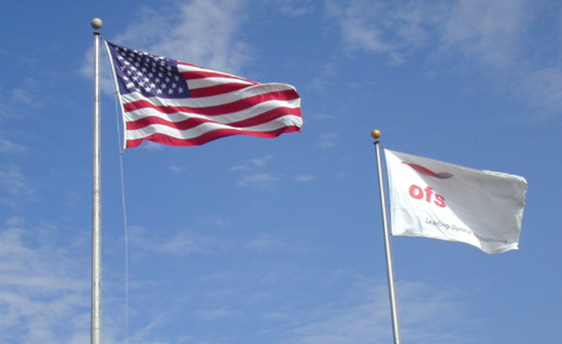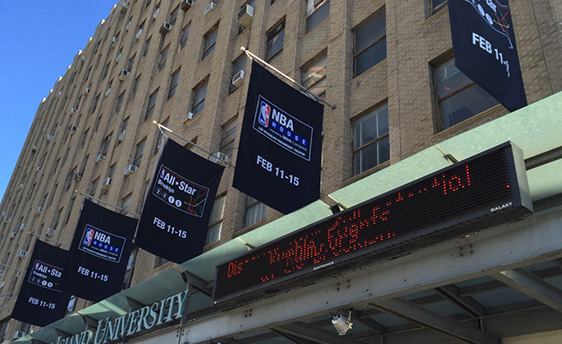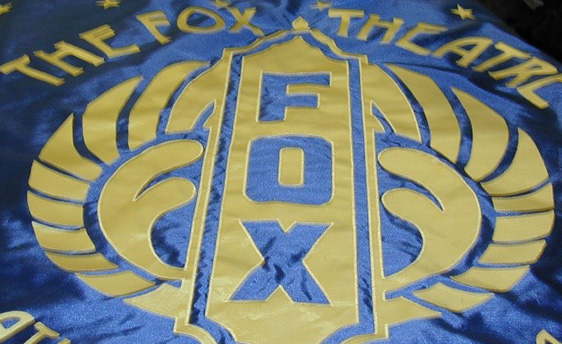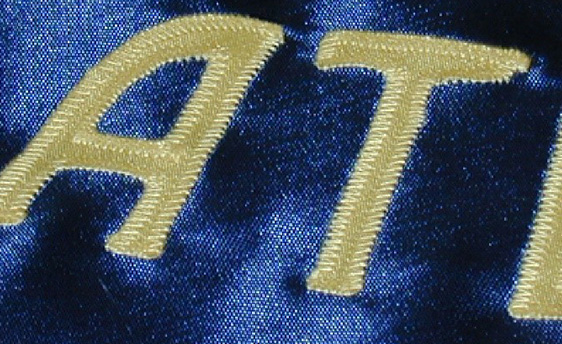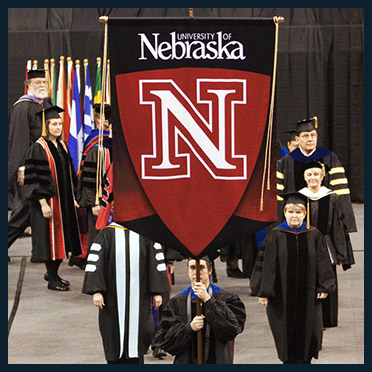
Depending on quantity, application and budget, custom flags are fabricated by:
- Digital Printing
- Appliqué
- Silk-Screening
Each technology has its advantages.
Keep in mind that
"The lighter the flag, the better the fly".
DEFINITIONS:
Correct One Side, Reverse Second Side:
Most popular configuration - one piece of fabric with a "bleed through" or reverse image to second side.
Correct Double Sided:
Two flags are sewn together to give a double-sided image. Liners are used for opacity.
Correct One Side:
Print to one side only, little or no "bleed through" (rarely used).
DURABILITY:
For exterior application, flags are sewn using webbing along grommet and fly ends. Multiple rows of stitching are used to better withstand the elements.
SUN FADE AND WATER PROOFING PROTECTION:
If you wish additional weather protection, ask us about our ultraviolet shield spray. Call for details.
See What Others Are Saying About Us

Keon B - Atlanta, GAJanuary 29, 2019
Absolutely INCREDIBLE! Neal Zucker and his team do a great job with their work, and we use their services on an annual basis.
via:

More Testimonials
DIGITAL PRINTING:
A great way to produce Special Event, Interior and Exterior flags. Flags can be printed onto Car Flag Mesh fabric (single sided correct/reverse image back side) or Dacron fabric (double sided correct). Advantages to this process lie with lower production runs and the most vivid color output that you can imagine. Unlike silk-screening there are no screens to burn and setup is accomplished through computer technology.

Single Sided Correct

Car Mesh Fabric
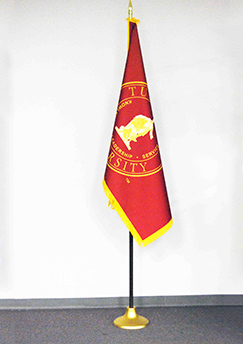
Dacron, double sided
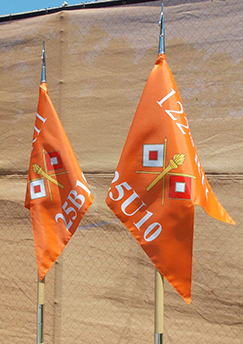
Guidon, double sided
APPLIQUÉ:
A traditional process, appliqué is the technique of sewing separate pieces of fabric onto a base material. Appliqué is used for interior and exterior applications.

(Pennant Flags / Appliqué)
SILK-SCREENING:
Used for volume production runs, silk-screening is a good choice for outdoor application because of durability to weather conditions. Printing costs include creating individual screens for each color. Silk-Screening is cost effective when costs can be amortized over larger production runs.
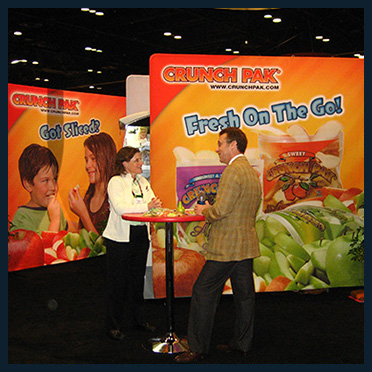 Corporate & Non-Profits